Healthy Relationships, Communication, & Conflict Repair
Understanding the Nervous System & Emotional Regulation
Relationships are a fundamental part of human life. They can provide belonging, support, encouragement, and opportunities for growth—but relationships can also become places where fear, control, disconnection, and harm are repeated.
Healthy relationships are not relationships without conflict. They are relationships where people can communicate honestly, maintain boundaries, take responsibility for their behavior, and repair when something goes wrong. Learning these skills can help us move beyond simply asking, “Is this relationship good or bad?” and begin asking: “How do we relate to one another, especially when things become difficult?”
What Makes a Relationship Healthy?
Healthy relationships are built through repeated experiences of safety, trust, respect, communication, and mutuality.
A healthy relationship generally allows people to:
-
Express emotions without fear of retaliation
-
Communicate needs and boundaries
-
Maintain individual identities and interests
-
Disagree without humiliation or intimidation
-
Take responsibility for mistakes
-
Apologize and repair harm
-
Ask for support without being controlled
-
Give and receive care
-
Feel respected even when there is disagreement
No relationship is perfect. Healthy relationships involve mistakes, misunderstandings, and difficult conversations. What matters is how people respond when those moments happen.
Safety does not mean never experiencing conflict. It means conflict does not require the loss of dignity, respect, or connection.
Healthy vs. Unhealthy Patterns
Sometimes unhealthy relationship patterns are difficult to recognize because they can feel familiar.
Healthy patterns may include:
1. Mutuality: Both people's needs, feelings, and perspectives matter.
2. Respect: Differences are allowed without degrading the other person.
3. Boundaries: Each person can communicate what they are and are not comfortable with.
4. Accountability: People can acknowledge when their actions cause harm.
5. Repair: Conflict creates an opportunity to understand and reconnect.
6. Trust: Words and actions are generally consistent over time.
Unhealthy patterns may include:
1. Control: One person attempts to dictate another person's choices, relationships, or behavior.
2. Contempt: Disagreement involves insults, humiliation, ridicule, or degradation.
3. Manipulation: Guilt, fear, threats, or emotional pressure are used to influence another person.
4. Avoidance: Important issues are repeatedly ignored rather than addressed.
5. Blame: Responsibility is consistently placed on the other person.
6. Boundary violations: A person's limits are repeatedly ignored after they have been communicated.
Recognizing an unhealthy pattern does not require labeling someone as a "bad person." It gives us information about what needs attention, change, or protection.
Communication Is More Than Talking
Healthy communication involves both expressing ourselves and being willing to understand someone else's experience. Communication can become difficult when we enter a conversation focused only on proving that we are right.
Instead, we can approach difficult conversations with curiosity:
What am I trying to communicate?
What am I actually feeling?
What do I need?
What am I assuming about the other person's intentions?
Am I willing to understand their perspective even if I disagree with it?
Effective communication does not require agreement. Understanding someone is not the same as agreeing with them.
Active Listening
Active listening means giving another person your attention with the intention of understanding rather than simply preparing your response.
It can include:
-
Giving the person your attention
-
Allowing them to finish speaking
-
Asking clarifying questions
-
Reflecting back what you heard
-
Acknowledging their emotions
-
Avoiding unnecessary interruptions
-
Checking assumptions
-
Staying curious
For example: "What I'm hearing is that you felt hurt when I canceled because it made you feel like your time wasn't important. Is that right?"
This does not mean you have agreed that their interpretation is completely correct.
It communicates: "I care enough about your experience to try to understand it."
Empathy Without Taking Responsibility
Empathy means trying to understand another person's experience from their perspective.
It does not mean:
-
Agreeing with everything they say
-
Accepting harmful behavior
-
Ignoring your own needs
-
Taking responsibility for their emotions
-
Abandoning your boundaries
You can say: "I understand why that hurt you." while also saying: "I see the situation differently." Both can be true.
Healthy relationships make room for multiple perspectives.
Many conflicts become more difficult when needs are communicated indirectly.
Instead of: "You obviously don't care about me."
Try: "I've been feeling disconnected lately, and I'd like us to spend some intentional time together."
Instead of: "You never listen."
Try: "I need to finish explaining before we respond to each other."
A helpful framework is:
I feel...
When...
Because...
I need/request...
For example:
"I feel overwhelmed when plans change without communication because I need more predictability. Could we talk before making changes next time?"
This focuses on communicating an experience and request rather than attacking someone's character.
Expressing Needs Clearly
Boundaries Are Part of Healthy Connection
A boundary communicates what we are comfortable with, what we are not comfortable with, and what we will do to care for ourselves.
Boundaries can involve:
-
Time
-
Physical space
-
Emotional availability
-
Communication
-
Privacy
-
Money
-
Relationships
-
Personal values
A boundary might sound like: "I'm not comfortable continuing this conversation while we're yelling. I'm going to take some time and come back to it when we're both calmer."
Healthy boundaries are not punishments. They are a way of creating clarity and protecting the conditions necessary for healthy connection. Just as importantly, other people's boundaries deserve respect.
Conflict Is Not the Enemy
Conflict is inevitable whenever people with different experiences, needs, expectations, and perspectives interact. The goal is not to eliminate conflict. The goal is to learn how to move through conflict without causing unnecessary harm.
Healthy conflict can actually provide opportunities to:
-
Understand each other more deeply
-
Identify unmet needs
-
Clarify expectations
-
Establish boundaries
-
Practice communication
-
Strengthen trust through repair
Conflict becomes particularly harmful when it involves intimidation, threats, coercion, violence, humiliation, or repeated violations of boundaries. In those situations, the priority is not simply "better communication." Safety comes first.
The Power of Repair
One of the most important relationship skills is learning how to repair after something goes wrong. Repair means acknowledging the rupture and taking meaningful steps toward restoring trust.
A genuine repair might include:
Acknowledgment: "I interrupted you, and I can see that made you feel dismissed."
Accountability: "That was my behavior, and I take responsibility for it."
Empathy: "I understand why that would have hurt."
Change: "Next time, I'm going to let you finish before I respond."
Follow-through: Actually demonstrating the change over time.
An apology without changed behavior may provide temporary relief, but consistent behavior is what rebuilds trust.
What Repair Is Not
Repair does not mean: "I'm sorry you feel that way."
It does not mean: "I only did that because you made me angry."
It does not mean: "Can we just forget about it?"
And it does not mean forcing someone to forgive before they are ready.
Healthy repair requires accountability without defensiveness. Sometimes repair also means accepting that another person needs distance or that a relationship cannot safely continue.
Not every relationship can or should be repaired.
Boundaries, Accountability & Compassion
Healthy relationships require a balance between compassion and accountability.
Compassion asks: "What might be happening for this person?"
Accountability asks: "What responsibility do I have for my behavior?"
Boundaries ask: "What do I need in order to remain safe and healthy?"
These questions can exist together. Understanding why someone behaves harmfully does not mean accepting the behavior. Likewise, holding someone accountable does not require treating them without compassion. We can understand someone's pain without allowing that pain to become permission to hurt others.
Breaking Relational Cycles
Many of us learn relationship patterns before we are old enough to consciously evaluate them.
We may have learned:
-
Conflict means abandonment
-
Anger means danger
-
Love means sacrificing yourself
-
Asking for help is weakness
-
Boundaries are rejection
-
Apologizing means losing
-
Vulnerability is unsafe
-
Silence is the safest way to avoid conflict
These beliefs can influence how we relate as adults. But learned patterns are not permanent identities. With awareness, supportive relationships, education, and practice, we can begin creating different experiences.
We can learn that:
Conflict can be repaired.
Boundaries can coexist with love.
Vulnerability can exist alongside strength.
Accountability does not have to mean shame.
Connection does not require self-abandonment.
A Simple Conflict Repair Practice
When a conflict occurs, consider moving through these steps:
1. Pause: Give yourself enough space to respond rather than react.
2. Reflect: Ask yourself what you are feeling and what may have contributed to it.
3. Listen: Try to understand the other person's experience.
4. Own Your Part: Identify what you are responsible for without taking responsibility for everything.
5. Repair: Acknowledge the impact of your actions and communicate what you intend to do differently.
6. Follow Through: Let your behavior demonstrate the change.
Repair is not a single conversation. Trust is rebuilt through consistent experiences over time.
Why Healthy Relationships Matter
Relationships are one of the primary environments where people experience safety, belonging, conflict, support, and repair. They can therefore become places where harmful patterns are continued or interrupted. When we learn to communicate, listen, set boundaries, repair harm, and remain connected through differences, we create relational experiences that can influence more than just the people involved.
A healthier relationship can influence a family. A healthier family can influence children. Children carry their experiences into future relationships. And those relationships become part of the communities they create.
This is how relational healing can become part of breaking generational cycles.
Key Takeaways
✔ Healthy relationships are not conflict-free; they are capable of navigating conflict safely.
✔ Communication involves both expressing ourselves and understanding others.
✔ Active listening helps people feel heard without requiring agreement.
✔ Empathy and boundaries can coexist.
✔ Boundaries protect healthy connection rather than preventing it.
✔ Accountability means taking responsibility for our behavior and its impact.
✔ Repair is an essential part of maintaining trust.
✔ Understanding harmful patterns can help us interrupt them without excusing harmful behavior.
✔ Healthy relationships provide opportunities to practice new ways of connecting.
References
Gottman, J. M., & Silver, N. (2015). The seven principles for making marriage work: A practical guide from the country's foremost relationship expert (Revised ed.). Harmony.
Johnson, S. M. (2008). Hold me tight: Seven conversations for a lifetime of love. Little, Brown Spark.
Lerner, H. (2001). The dance of connection: How to talk to someone when you're mad, hurt, scared, frustrated, insulted, betrayed, or desperate. HarperCollins.
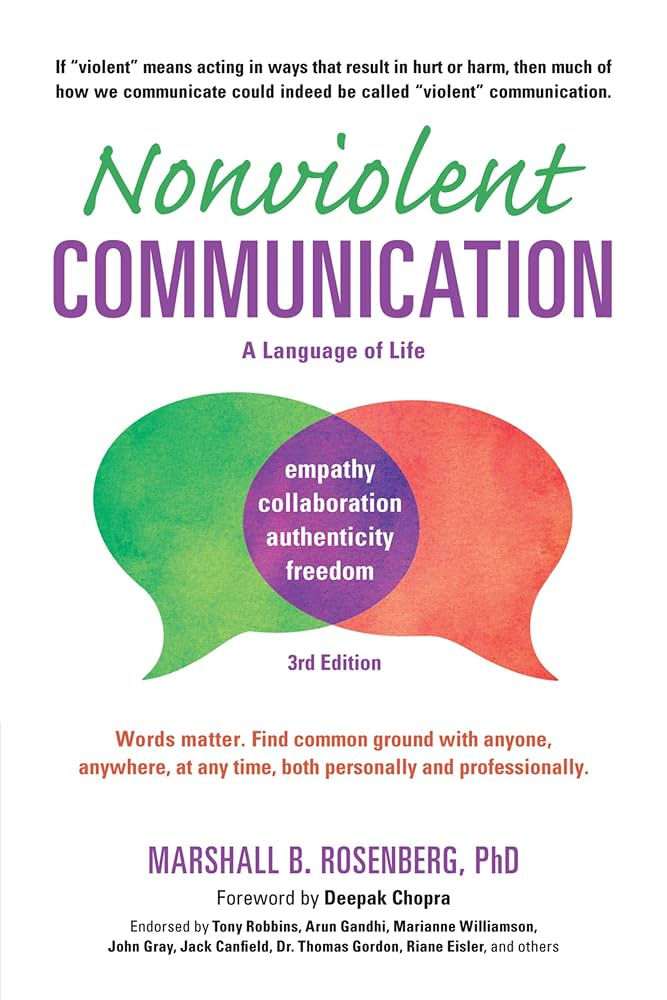
Rosenberg, M. B. (2015). Nonviolent communication: A language of life (3rd ed.). PuddleDancer Press.
Tawwab, N. G. (2021). Set boundaries, find peace: A guide to reclaiming yourself. TarcherPerigee.
Gottman, J. M., & Levenson, R. W. (1992). Marital processes predictive of later dissolution: Behavior, physiology, and health. Journal of Personality and Social Psychology, 63(2), 221–233. https://doi.org/10.1037/0022-3514.63.2.221
Recommended Reading
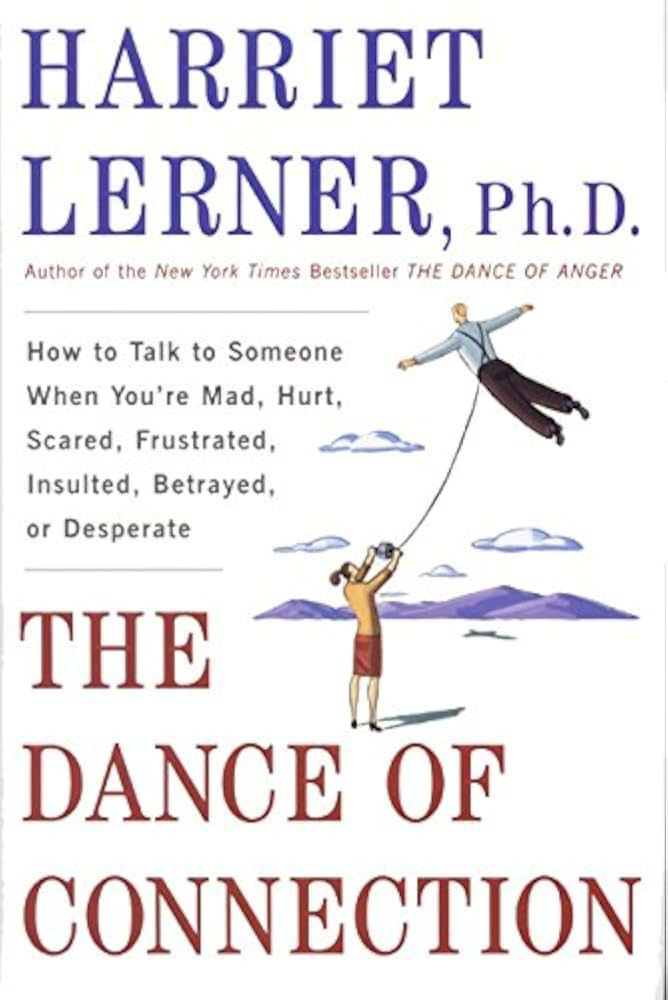
The Dance of Connection
Harriet Lerner, Ph.D.
Explores communication patterns, difficult conversations, and how people can change their participation in recurring relationship dynamics.
Topics: Communication, relationships, conflict, boundaries, relational patterns
Best for: Understanding recurring relationship dynamics
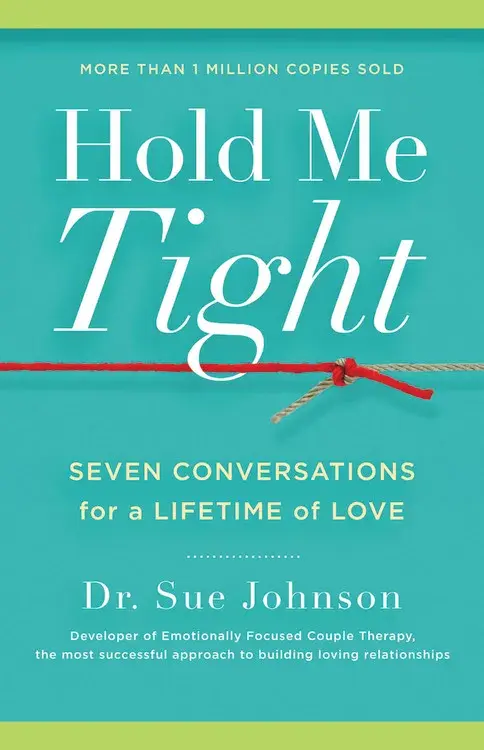
Hold Me Tight
Sue Johnson, Ed.D.
Explores emotional connection and attachment in intimate relationships and offers practical conversations designed to strengthen relational bonds.
Topics: Attachment, emotional connection, communication, relationships, repair
Best for: Understanding emotional connection in romantic relationships